What does it really mean to participate in a data economy where value is created without compromising control?
In a recent Ocean Enterprise webinar, we explored exactly that, through a hands-on demonstration of how assets are published, accessed, and used within the marketplace. The complete webinar is available here:
Assets and Services
At the core of Ocean Enterprise is a simple but powerful idea: data remains with its owner, yet can still generate value.
This is enabled through a clear structure built around assets and services. An asset represents intellectual property, whether a dataset, an algorithm, or any digital resource. What gives it commercial and operational meaning are the services attached to it.
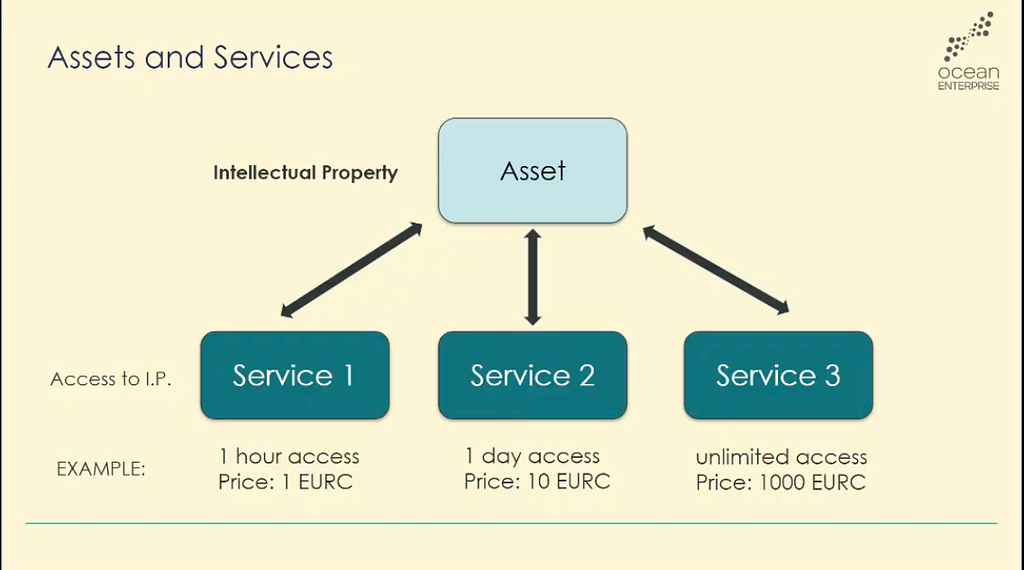
Each asset can be offered through multiple services, turning a single resource into several distinct value propositions. For example, the same dataset can be accessed for one hour at a low price, for one day at a higher price, or with unlimited access under a different model. This flexibility transforms data into a configurable product, adaptable to different users and use cases.
Publishing and Consuming Assets
Publishing an asset follows a structured sequence:
- defining asset metadata
- setting access credentials at asset level
- configuring service metadata and credentials
- establishing pricing
- adding extended descriptions
- previewing the asset
- and finally publishing it.
This process ensures that every asset entering the marketplace is not just uploaded, but properly contextualized, governed, and monetized.
From the consumer perspective, accessing assets is equally structured. Before any interaction, users must pass credential checks and understand pricing and usage conditions. This creates a predictable and transparent experience on both sides.
Access control
One of the most important shifts introduced by Ocean Enterprise is how access is defined. Access control operates on two complementary layers:
- Web3-based access, where permissions are managed through allowlists and denylists tied to wallet addresses, offering a straightforward control mechanism.
- SSI (Self-Sovereign Identity)-based access, where users must present verifiable credentials that comply with predefined policies. This allows much more granular control where access can depend on attributes such as legal status, geography, or organizational role.
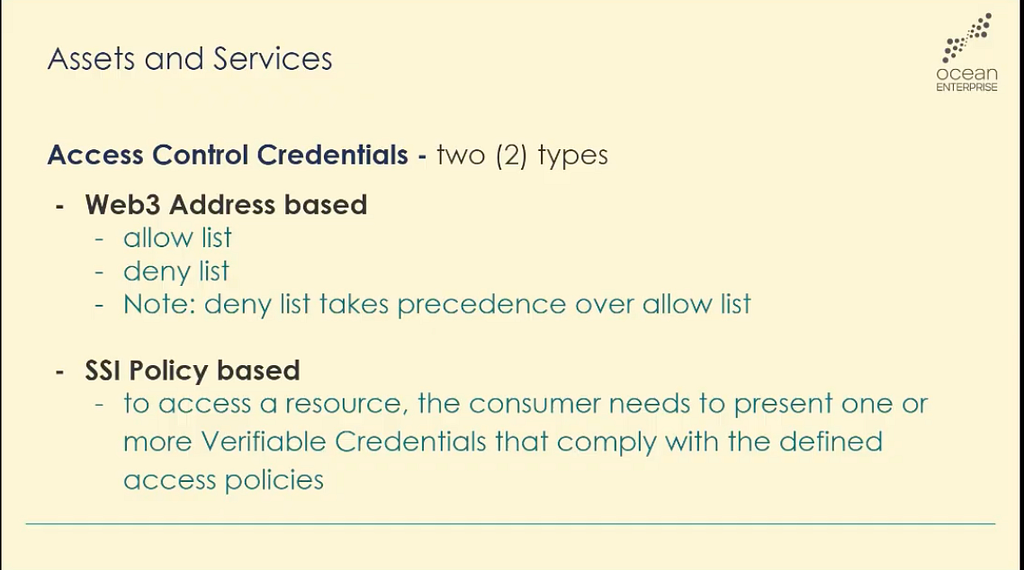
In practice, this turns compliance and governance into something executable. Rules are no longer external constraints, they are embedded directly into how data is accessed.
Compute-to-Data (C2D)
This is where the model fundamentally evolves beyond traditional data sharing.
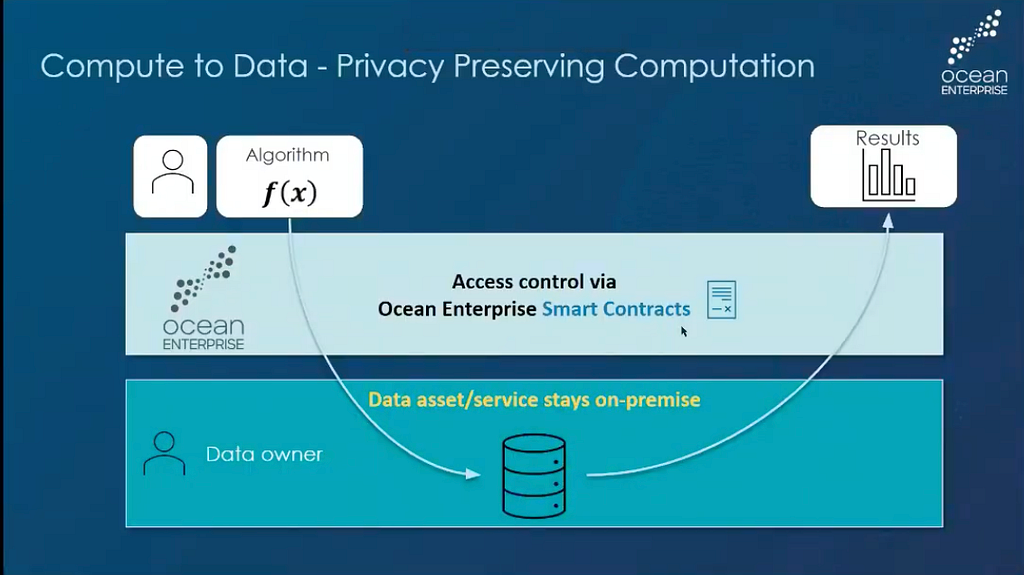
Instead of transferring data, Ocean Enterprise enables Compute-to-Data (C2D): algorithms are sent to where the data resides, executed there, and only the results are returned.
This approach preserves confidentiality while still allowing data to be used, analyzed, and monetized. It is particularly relevant in contexts where data sensitivity, regulation, or ownership constraints limit direct sharing.
A Functional Data Ecosystem
What emerges from this is a functional data ecosystem. Assets are structured, access is governed, and computation is controlled. Every interaction, whether publishing, accessing, or running a job, is designed to balance control, trust, and value creation.
About Ocean Enterprise Collective
The Ocean Enterprise Collective e.V. (OEC) is a non-profit association committed to providing next generation data exchange software that is available to everyone and owned by no one.
The primary focus of OEC is designing, developing and maintaining Ocean Enterprise (OE), a free open-source enterprise-ready data ecosystem software solution that enables organizations to securely manage and monetize proprietary AI & data products and services in a trusted and compliant environment.
OEC members span numerous countries and represent various industries including agriculture, healthcare, aerospace, and manufacturing. We invite you to join us in actively shaping the future of data sharing, AI compliance, and decentralized marketplaces.
Get in touch with the Ocean Enterprise Collective team: info@oceanenterprise.io